bath
Bathroom Mirror Ideas: Size, Placement, and the Backlit Trend Explained
Nov
The mirror is the one bathroom fixture you use without thinking — and the one most bathrooms get wrong. Too small and the room feels cramped; hung too high and half the household can’t see themselves; lit badly and every morning starts with guesswork. A well-chosen mirror does triple duty: it makes the room look bigger, bounces light into dark corners, and turns the vanity into a genuinely functional grooming station. Here’s how to choose and place one like a designer.
Size it to the vanity, not the wall
The classic rule still holds: your mirror should be a few inches narrower than the vanity on each side — typically 70 to 80 percent of the vanity’s width. A 48-inch vanity pairs beautifully with a 36 to 40-inch mirror. Going wall-to-wall with the mirror can work in a modern bathroom, but it leaves no room for sconces and can feel cold.
Height matters as much as width. The mirror’s center should sit at average eye level, roughly 60 to 65 inches from the floor, with the bottom edge starting a few inches above the backsplash — usually 5 to 10 inches above the faucet. In a household with a big height range, err toward a taller mirror rather than a perfectly centered small one. Round mirrors are forgiving here: their shape naturally accommodates different eye levels, and they soften all the hard rectangles of a bathroom. Sizing the mirror generously is one of the simplest bathroom remodeling tips that make a home elegant and modern — it costs little and changes the whole feel of the room.
One big mirror or a pair?
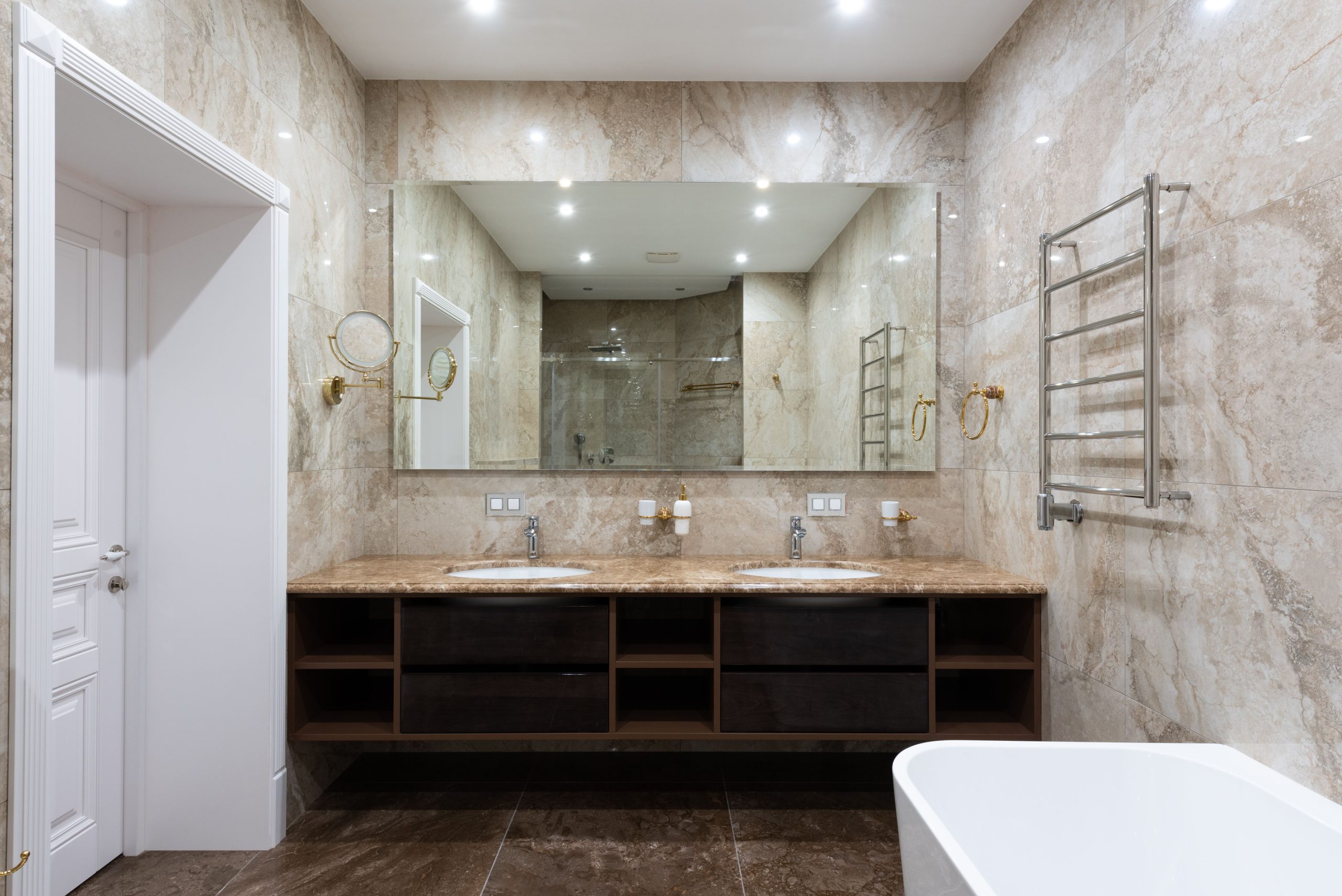
Over a single sink, one mirror is the obvious answer. Over a double vanity, you have a real choice. A single long mirror spanning both sinks looks sleek and contemporary and maximizes reflected light. Two separate mirrors — one centered over each sink — read more traditional, give each user their own zone, and leave wall space between them for a sconce or art.
There’s no wrong answer, but match the choice to the room’s style: minimal modern bathrooms favor the single span; classic, transitional, and farmhouse styles favor the pair. If you’re working with a compact footprint, the space-stretching ideas in maximizing small spaces with innovative designs for compact bathrooms pair well with a large single mirror — the two tricks compound, and a small bathroom can feel twice its size.
The backlit mirror trend, honestly assessed
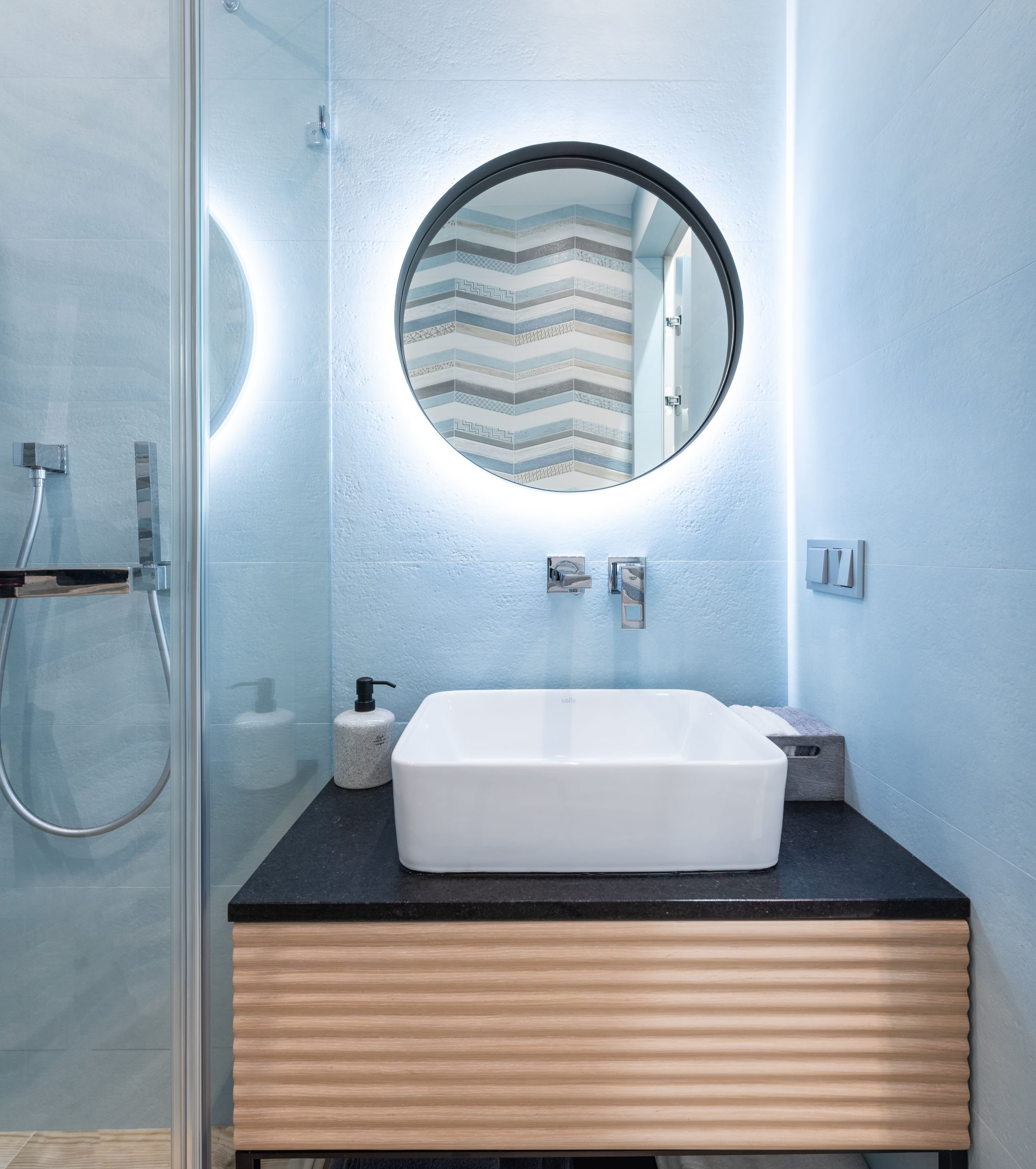
Backlit (LED) mirrors are the defining bathroom mirror trend of 2026, and for good reason: the halo of light around the glass provides soft, shadow-free illumination that’s genuinely flattering, they free up wall space where sconces won’t fit, and most include anti-fog demisters and dimmers. In a small bathroom, a backlit mirror can replace two fixtures at once.
The caveats: the light is ambient, not task-grade — for precise makeup or shaving you’ll still want brighter, forward-facing light. LED color temperature matters enormously; look for 2700K to 3000K (warm white) with a CRI above 90 so your face looks like your face. And like any wired fixture in a bathroom, it needs proper installation on a GFCI-protected circuit. A backlit mirror contributes to the layered glow of a warm and welcoming bathroom, but think of it as the base layer, not the whole lighting plan.
Frames: the jewelry of the bathroom
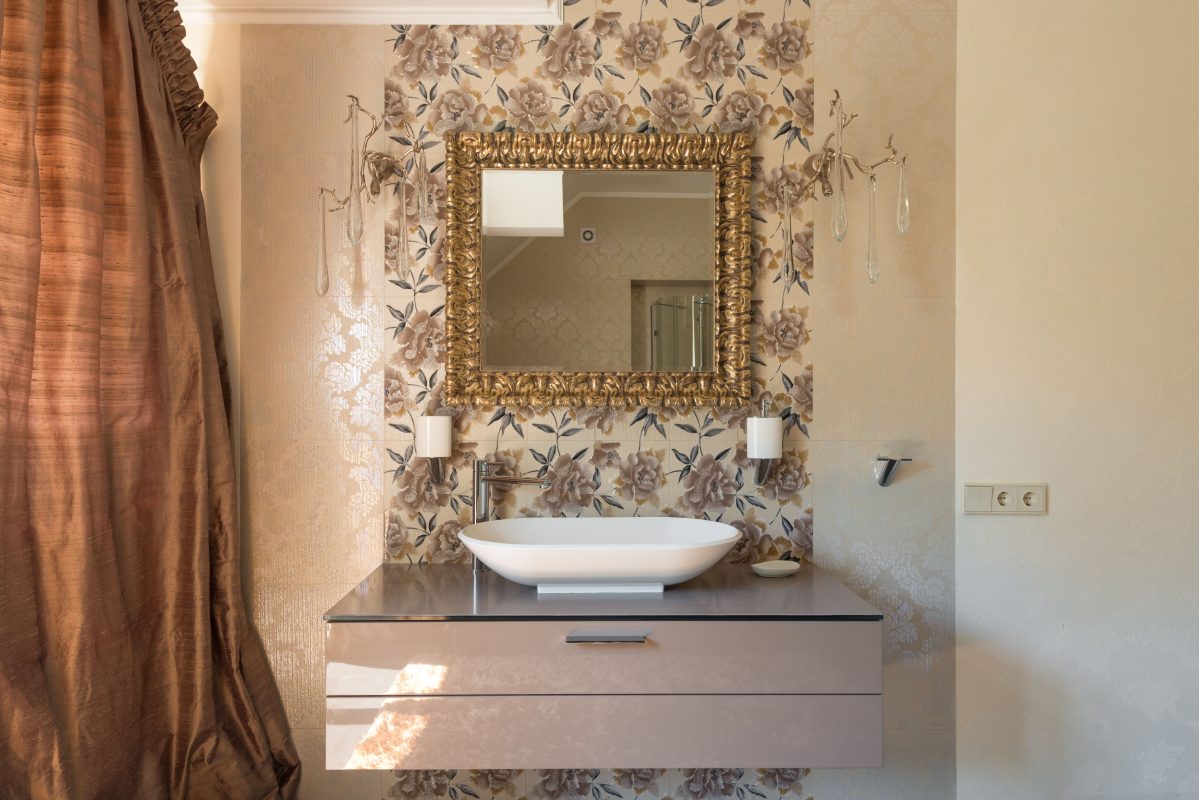
A framed mirror is the easiest style upgrade in the room — it’s wall jewelry. Thin black metal frames suit modern spaces; brass or champagne frames warm up white bathrooms; natural wood frames add organic texture; arched tops soften contemporary rooms. The frame finish is also your chance to tie the room together: echo the faucet finish, the cabinet hardware, and the shower trim for a collected, intentional look.
If you’re coordinating a full fixture refresh, it’s worth choosing the right shower panel with the factors that matter in the same finish family — a brushed-gold mirror frame next to a chrome shower panel looks like an accident, while matched metals look like a plan. And if a rainfall showerhead is part of the vision, read how to install a rain shower head early — the plumbing rough-in affects where everything else can go.
Placement tricks designers actually use
A mirror opposite the window doubles your natural light — the single highest-impact placement trick there is. In a windowless bathroom, angle matters: a mirror that reflects the brightest wall (usually the one with the vanity lighting) multiplies the light you have. Tilt the top of the mirror out from the wall by a few degrees and it catches more ceiling light while reducing glare.
Don’t forget the full-length option. A tall mirror on the back of the door or an unused wall section is invaluable in a primary bathroom and costs a fraction of a second vanity mirror. Keep mirrors away from direct shower spray — constant hot mist etches the backing over time, starting as black spots creeping in from the edges. The same moisture awareness behind our water-saving tips for efficient usage applies here: less steam escaping the shower area means a longer-lived mirror.
Keeping it clear: fog and maintenance
Fog is a ventilation problem wearing a mirror’s clothes. A properly sized exhaust fan — at least 1 CFM per square foot of bathroom, run for 20 minutes after showering — prevents most fogging and protects every finish in the room. For the mirror itself, a thin film of shaving cream wiped on and buffed off leaves an invisible anti-fog layer that lasts days; dedicated anti-fog sprays work similarly.
Clean mirrors with a microfiber cloth and plain water or a 50/50 water-and-white-vinegar mix. Paper towels shed lint and ammonia-based cleaners can damage specialty coatings on anti-fog and backlit models. Wipe from top to bottom in an S-pattern and you’ll never chase streaks again.
The bottom line
Size the mirror to the vanity, hang it at real eye level, give it good light, and match its frame to the room’s metals. Four decisions, none expensive — and the bathroom feels designed instead of defaulted.