Shower panel
Why Your Shower Goes Cold When the Toilet Flushes — and How Thermostatic Valves Fix It
Oct
You are mid-shower, the water is perfect — and then someone flushes the toilet. A heartbeat later the spray turns icy, or worse, scalding. If this sounds familiar, your shower is not haunted. It is hydraulics. And the fix has been standard equipment in modern bathrooms for years: a pressure-balancing or thermostatic valve.
With colder weather on the way, the problem tends to get more noticeable. Mains water runs colder in fall and winter, so your shower valve has to work harder to hold a comfortable mix. If it cannot keep up, every flush, every dishwasher cycle, every washing machine fill becomes a temperature shock. Here is what is happening inside your pipes, and what to do about it.
Why a flush steals your hot water
Most homes run their fixtures off shared hot and cold supply lines. When you set your shower, the valve blends those two streams to your chosen temperature. Then someone flushes: the toilet tank refills by pulling a sudden slug of cold water out of that same shared line. Cold-water pressure at your shower valve drops instantly, but the hot side keeps flowing at full strength — so the blend swings hot. When the tank finishes filling, pressure returns and the blend swings back. Old-fashioned two-handle valves have no defense against any of this; whatever pressure change arrives at the valve passes straight through to your skin.
The same thing happens in reverse. Start the dishwasher while someone showers and the cold side can surge back. This is the classic story covered in guides to troubleshooting common shower panel issues, where temperature fluctuation tops the list of complaints about older setups.
How a pressure-balancing valve protects you
A pressure-balancing valve watches the pressure on the hot and cold inlets. When one side drops, it chokes the other side down to match, keeping the hot-to-cold ratio you dialed in. The temperature stays put. The trade-off: total flow falls. Your shower gets weaker, but not colder or hotter.
That is a big comfort upgrade over a plain mixer, but it has limits. Pressure-balancing valves react to pressure, not temperature. On a cold winter morning, when the incoming cold supply is much colder than in summer, the valve holds the ratio — but the same ratio now produces a cooler blend, because the cold side itself is colder. You end up nudging the handle warmer and the whole system hunts around for a stable point.
Thermostatic valves: the actual set-and-forget answer
A thermostatic valve goes one step further. Inside is a wax or bi-metal cartridge that senses the actual mixed-water temperature and continuously adjusts the hot and cold inlets to hold it — even when pressure swings wildly on either side. Flush the toilet, run the tap, fill the tub: the temperature at the showerhead stays where you set it, and the flow stays full. Most units also include an anti-scald stop that caps the maximum temperature, which is why building codes in many jurisdictions now favor them — a real safety feature for households with kids or older adults.
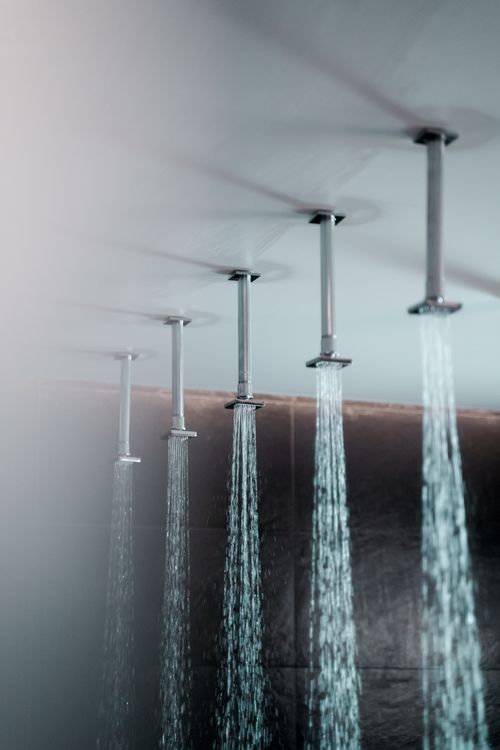
This is exactly the kind of control built into modern multi-function shower panels. When you are choosing the right shower panel, an integrated thermostatic valve is one of the features worth prioritizing: it replaces the entire guessing game of handle-twisting with a dial you set once.
Pressure-balanced vs. thermostatic: which should you get?
Both are a leap beyond a basic mixer. If your only complaint is temperature swings when other fixtures run, a pressure-balancing valve solves it and is the more budget-friendly of the two. If you want a precise temperature that holds steady in every season — including those frigid-water winter mornings — and the strongest anti-scald protection, go thermostatic. For families, rentals, and anyone who has ever yelped mid-shampoo, thermostatic is the better investment.
Why winter makes a weak valve obvious
Cold weather exposes marginal plumbing in two ways. First, the incoming cold supply is much colder, so any temperature instability is amplified — a swing that was a mild annoyance in August becomes a shock in November. Second, household hot-water demand rises: longer showers, hotter settings, and the water heater working harder to reach temperature. That means thinner margins and more noticeable dips. If your shower has always been a little temperamental, late fall is when it turns into a daily complaint. A valve upgrade before the coldest months is one of the highest-comfort, lowest-cost fixes in the bathroom.
The easiest upgrade path: a shower panel with thermostatic control
Replacing a rough-in valve behind the wall is a plumber’s job — doable, but it means opening tile. An increasingly popular alternative is a surface-mounted shower panel with an integrated thermostatic valve. It connects to your existing hot and cold supplies, mounts flat on the wall, and gives you a thermostatic control dial plus a full suite of outlets — rainfall head, body jets, and handheld wand — in one unit. You get the temperature stability of a thermostatic system and a major shower upgrade in the same afternoon, without tearing the wall open. They are also a strong fit for shower designs for compact bathrooms, where a panel adds function without taking floor space.
Pair the upgrade with a few good habits and your shower will treat you better all winter: keep aerators and nozzles descaled so flow stays even, and do not crank the water heater above a safe set point trying to compensate for a weak valve. For more ways to keep consumption in check while you enjoy hotter winter showers, see our water-saving shower tips.
The bottom line
A shower that goes cold when the toilet flushes is not a plumbing mystery — it is a valve problem with a valve solution. Pressure-balancing keeps the mix steady; thermostatic control keeps the temperature exact, all year round. If you are already thinking about a bathroom refresh, look at a rain shower head upgrade or a full panel — and make thermostatic control non-negotiable. Your future self, mid-shower on a January morning, will thank you.
A stable, comfortable shower is one of those quiet details that makes a bathroom feel like a warm and welcoming bathroom instead of a daily gamble. Fix the valve, and the flush becomes somebody else’s problem.