Shower panel
How to Descale a Shower Panel: A 30-Minute Routine That Keeps Every Jet Flowing
Nov
Mineral buildup is the quiet killer of a great shower. One month the rainfall head feels like a warm downpour; a year later it sputters from half its nozzles, the body jets shoot sideways, and the whole panel feels tired. The culprit is almost always limescale — calcium and magnesium left behind every time hard water evaporates on a warm surface. The good news: a shower panel is one of the easiest fixtures in the house to descale, because everything you need to clean is right there on the surface. Here is a 30-minute routine that keeps every jet flowing like day one.
How to tell your panel needs descaling
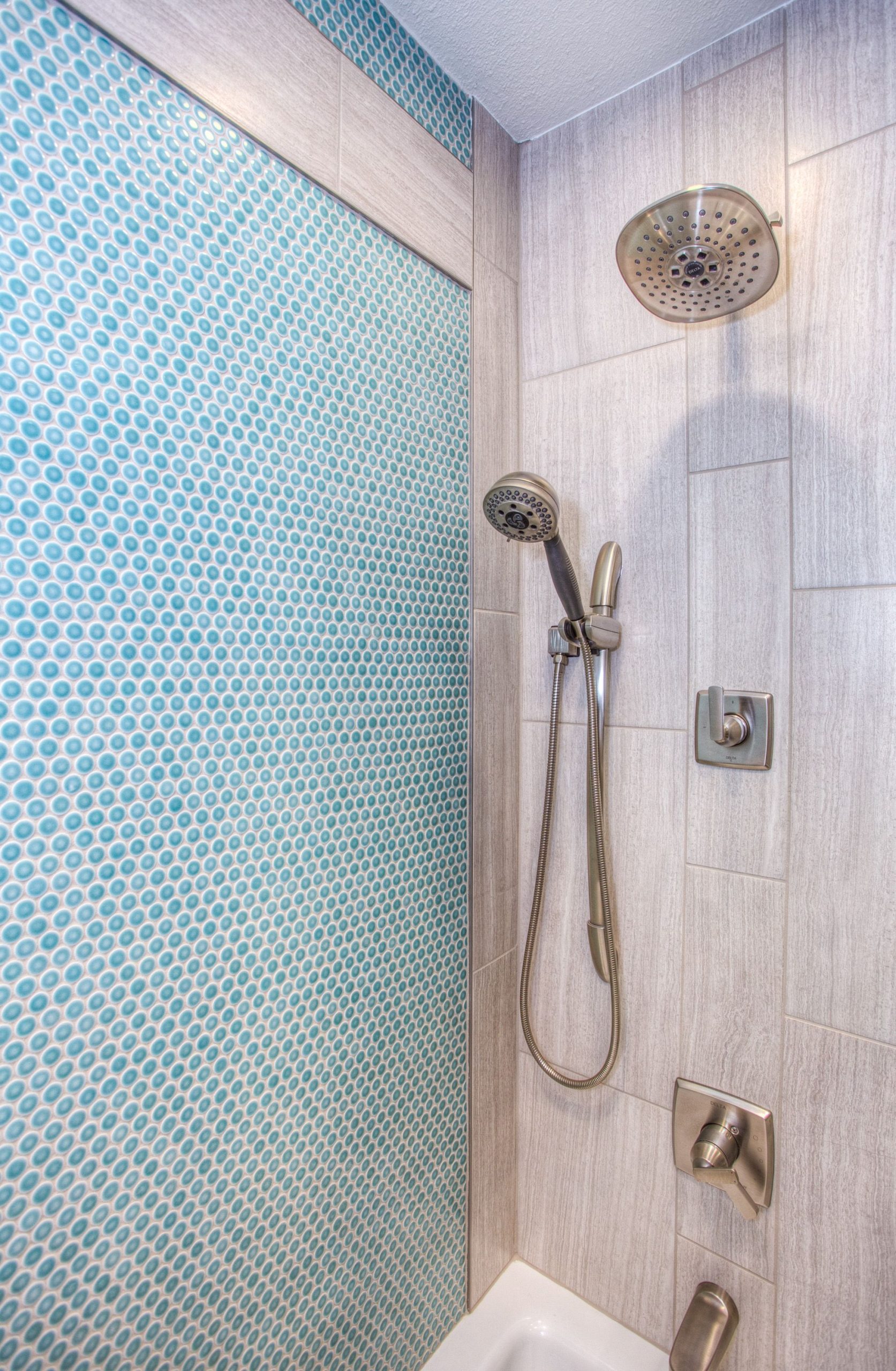
Scale announces itself gradually. Watch for nozzles that spray off at odd angles, a rainfall pattern with visible gaps, white crust forming around jet rims and the handheld wand’s face, or a general drop in flow that no valve adjustment fixes. If you can see chalky deposits with a fingernail test — scratch a jet rim and white powder flakes off — you are overdue. Homes on well water or in hard-water regions may need this routine every two to three months; soft-water homes can often stretch to twice a year. Catching it early matters because thick scale eventually clogs the tiny internal passages that no surface wipe can reach, and at that point you are looking at the kind of problem covered in troubleshooting common shower panel issues rather than a simple cleaning.
What to use (and what to never use)
White distilled vinegar is the hero here: cheap, food-safe, and strong enough to dissolve calcium carbonate without attacking chrome or stainless steel. You will also want a spray bottle, an old toothbrush or soft detailing brush, microfiber cloths, a plastic bag and rubber band for soaking the handheld wand, and optionally a commercial citric-acid descaler for heavy buildup. What goes on the never list: bleach (does nothing to scale and can pit finishes), abrasive powders or scouring pads (they scratch brushed stainless permanently), and strong acids like muriatic acid, which will eat seals and void warranties. When you are choosing the right shower panel, by the way, silicone nozzles are worth prioritizing — you can literally rub scale off them with a fingertip, which makes this whole routine twice as fast.
The 30-minute descaling routine, step by step
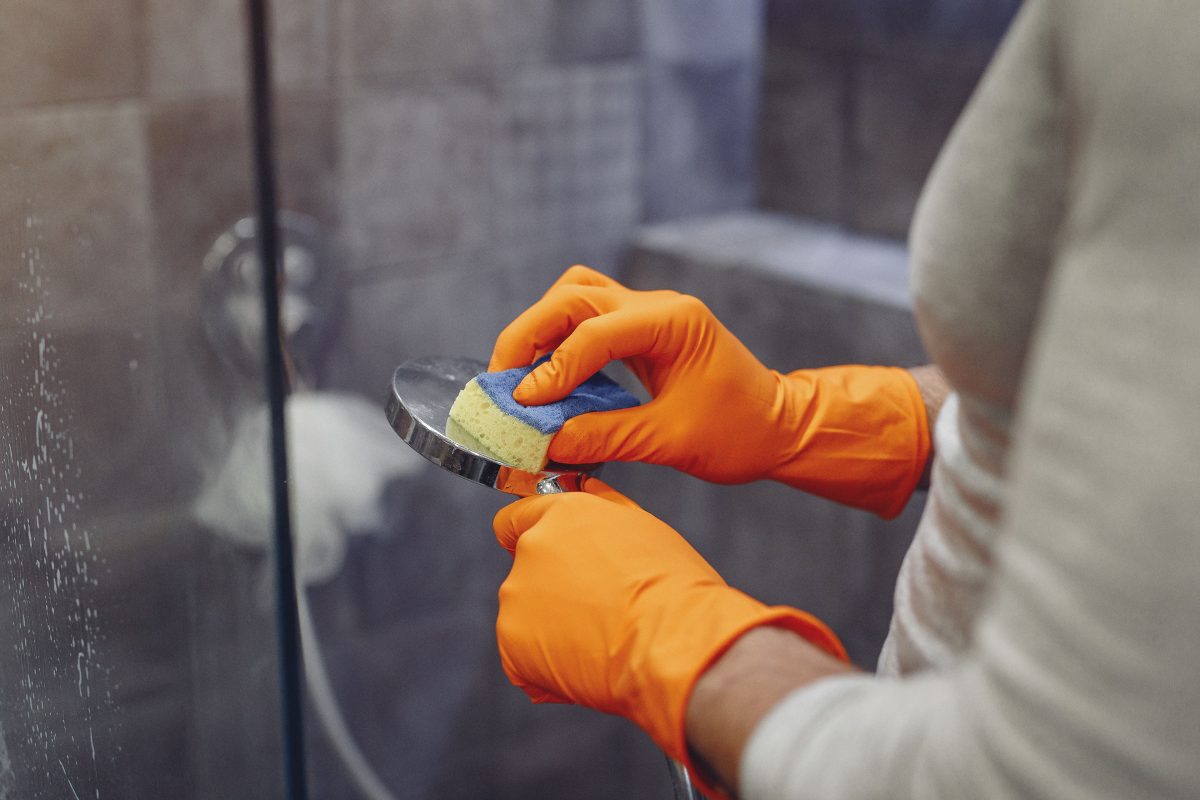
Start with the panel dry. Fill the spray bottle with undiluted white vinegar and mist every nozzle face, jet rim, the waterfall slot, and the handheld wand generously — you want them visibly wet. Let it dwell for 15 minutes; for heavy crust, lay vinegar-soaked paper towels over the worst spots so they stay wet. Meanwhile, fill the plastic bag halfway with vinegar, slip it over the handheld wand so the nozzle face is submerged, and secure it with the rubber band. After the dwell, scrub each nozzle cluster gently with the toothbrush, working the bristles around each jet to break up loosened scale. Rinse everything with hot water from the handheld wand itself, then run each outlet — rainfall, waterfall, jets, wand — for 30 seconds to flush loosened debris out of the internal passages. Finish by wiping the whole stainless column with a damp microfiber cloth and buffing dry; standing water droplets are what start the next round of scale.
Body jets and the waterfall slot need extra attention
The rainfall head gets all the glory, but the six body jets and the waterfall slot are where scale does its worst work. Body jets have small oscillating or directional mechanisms, and even a thin ring of scale around a jet can freeze its aim or narrow its stream. Give each jet an individual 30 seconds: a vinegar-dampened cotton swab worked around the rim, a gentle press-and-release on the nozzle face if the design allows, and a test spray. The waterfall slot — a wide, thin opening — clogs along its edges first, which shows up as an uneven sheet that is thick on one side and thin on the other. Run a folded, vinegar-dampened cloth along the full length of the slot, then run the waterfall for a full minute to clear it. This is also the moment to check that your water-saving habits are not working against you: very low flow settings let water sit and evaporate in the nozzles, which accelerates scale.
Preventing scale between deep cleans
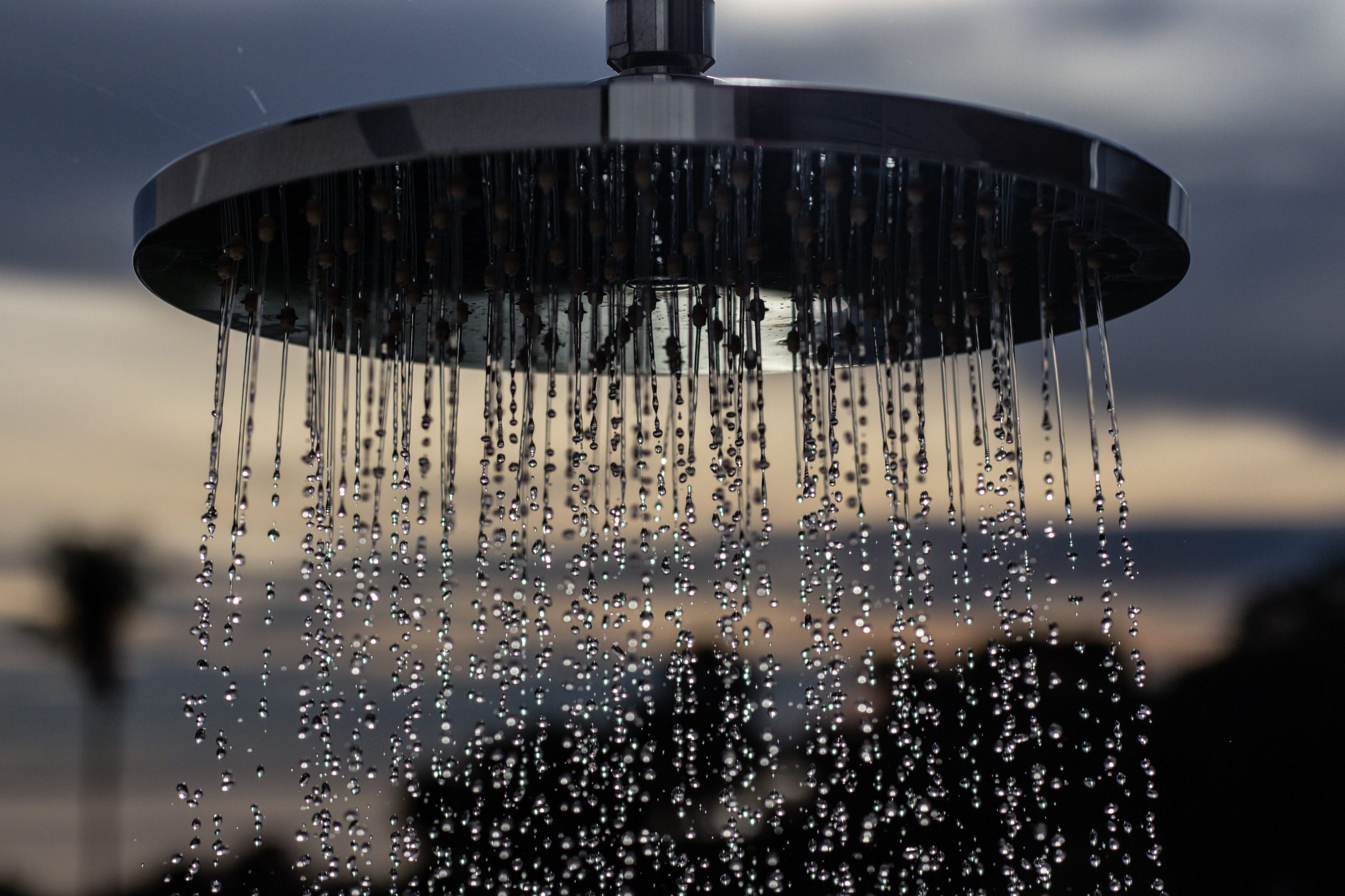
The cheapest descaler is a squeegee habit. After your shower, run the handheld wand over the panel for ten seconds to rinse off soapy water — soap scum plus minerals is what forms the really stubborn crust — and give the stainless a quick wipe with the microfiber cloth you keep hanging nearby. In very hard-water areas, a whole-house or shower-line water softener pays for itself in fixture life, and it is one of the greener choices you can make, alongside the ideas in our guide to eco-friendly shower panels. If your home has a water softener already, check that it is regenerating on schedule; a softener that ran out of salt months ago is just an expensive bypass pipe.
When descaling is not enough
Sometimes the problem is not scale at all. If flow stays weak after a thorough descale, check the inlet screens where the supply lines meet the panel — sediment from water-main work or a failing water heater dip tube can clog them. If a single jet stays dead, its internal passage may be blocked with grit that flushing cannot move, and that nozzle assembly may need replacing. And if the panel is over a decade old with scale in places you cannot reach, put the replacement cost in perspective: a modern panel with silicone nozzles and better materials will descale in minutes for the next decade. Pair the refresh with a few warm and welcoming bathroom updates and the occasional glance at rain shower head installation basics if you are swapping hardware at the same time, and if the whole room is getting attention, our bathroom remodeling tips will keep the project coherent.
Thirty minutes, twice a year, a bottle of vinegar: that is the entire secret to a panel that still feels new in year eight. Put it on the calendar the way you would a furnace filter, and every shower in between will thank you.